
Ask Money Questions. Get Real Answers for Nigeria. Grow Your Wealth Smarter.
Learn about investing, business, and financial growth in a simple way. Get answers from real people and experts across Africa.
Ask A QuestionLatest Finance News on Fokona
Fokona Latest Articles

Hello World!
My name is Mbadiwe Ikechukwu, popularly known as Iking Ferry.And today…I am not just writing a blog post.I am documenting the beginning of a mission. Let me say something very simple…But very powerful.Most people are not poor because they are ...

Why Zenith Bank Share Price Dropped After Dividend Declaration – Technical Adjustment Explained
Most Nigerians lose money in the stock market not because they invested in bad companies… But because they do not understand how the market actually works. One of the biggest areas where beginners get confused is something called: “Technical Adjustment.” ...
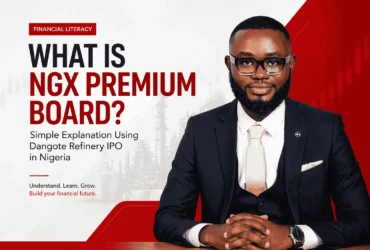
What is NGX Premium Board? (Explained Simply Using Dangote Refinery IPO in Nigeria)
Last week, I asked a simple question: “If Dangote Refinery IPO is listed on the Premium Board… do you understand what that means?” Many people said: “Iking, please explain.” So today…. As your Financial Literacy Advocate, let me break it ...
IS LAND BANKING A GOOD INVESTMENT?
Short answer: land banking can be a good investment, but only when the land is in a growing location, with clear title, and a defined exit plan. Otherwise, it becomes “dead capital.” Let’s analyze your parents’ situation like an investor—not emotionally. 1. First Reality Check (Very Important) TheyRead more
Short answer: land banking can be a good investment, but only when the land is in a growing location, with clear title, and a defined exit plan. Otherwise, it becomes “dead capital.”
See lessLet’s analyze your parents’ situation like an investor—not emotionally.
1. First Reality Check (Very Important)
They bought:
2 plots × ₦500k = ₦1M total (8 years ago)
Now:
Offer ≈ ₦20M total
👉 That’s a 20x return (~2,000%)
That is exceptional performance. So the question is no longer:
“Is land good?”
It is now:
“Should we lock in profit or keep speculating?”
2. The Critical Risk You Must Address First
They have a ₦4M loan
This changes everything.
👉 Debt = guaranteed negative return
👉 Land = uncertain future return
So:
Paying off the loan is non-negotiable priority
3. Evaluate the Two Options
OPTION A:
Sell both → ₦20M
Pay loan: ₦4M
Balance: ₦16M
Pros:
✅ Debt cleared completely
✅ Large liquidity (₦16M)
✅ Flexibility (can diversify)
✅ Risk reduced
Cons:
❌ Lose exposure to land appreciation
❌ May regret if area explodes in value
OPTION B:
Sell one → ₦8M
Pay loan: ₦4M
Balance: ₦4M
Still hold 1 plot
Pros:
✅ Keep exposure to land upside
✅ Still clear debt
✅ Partial liquidity
Cons:
❌ Buyer already negotiating lower price (weak position)
❌ Remaining land may be illiquid
❌ Only ₦4M left to reinvest (limited options)
4. What Most People Get Wrong About Land Banking
Land does NOT always keep appreciating fast.
Growth depends on:
Infrastructure development
Government policy
Population expansion
Commercial activity
👉 If the area stagnates, value can freeze for years
5. Smarter Investor Lens (What I’d Do)
Between the two:
👉 Option A is financially stronger
Why?
1. You already achieved massive gain
Holding longer = greed risk
2. You eliminate debt completely
Debt kills wealth faster than anything
3. ₦16M gives real investment power
You can split into:
Money Market Fund (stability)
Stocks / equity funds (growth)
Maybe ONE strategic land purchase (not two random ones)
6. Suggested Allocation Strategy (Balanced)
If they go with Option A:
Example:
₦6M → Money Market Fund (liquidity + safety)
₦5M → Stocks / equity fund
₦5M → Buy one high-quality land (not multiple cheap ones)
👉 This is diversification, not blind land banking
7. When Option B Makes Sense
Only choose Option B if:
The remaining land is in a prime developing area
You are confident of near-term growth (2–5 years)
Title is very clean (C of O / Governor’s Consent)
Otherwise: 👉 You’re just holding land emotionally
8. Key Question You Must Answer
Ask this honestly:
“If we had ₦20M cash today, would we still choose to buy this same land again?”
If the answer is NO → sell both.
9. Final Verdict
Land banking = good, but not always optimal
Your parents already won the investment
The smarter move now is capital preservation + diversification
👉 Recommended: Option A (Sell both, reset smarter)
If you want, I can:
Help you evaluate the exact location potential of the land
Or design a ₦16M investment plan tailored to Nigeria (step-by-step)
At what income level are individuals required to start paying tax in Nigeria under the new tax rules?
The new Nigerian tax law (Nigeria Tax Act 2025) changed the thresholds quite significantly. Here’s the exact, current position—no guesswork. 1. For Individuals (Salary Earners, Civil Servants, etc.) ✅ Tax-free threshold: If you earn ₦800,000 or less per year → You pay ZERO tax That is roughly: ₦66,6Read more
The new Nigerian tax law (Nigeria Tax Act 2025) changed the thresholds quite significantly. Here’s the exact, current position—no guesswork.
See less1. For Individuals (Salary Earners, Civil Servants, etc.)
✅ Tax-free threshold:
If you earn ₦800,000 or less per year
→ You pay ZERO tax
That is roughly:
₦66,667 per month
👉 What happens above ₦800,000?
Only the amount above ₦800,000 is taxed
Tax is progressive (0% – 25%)
Example:
Salary = ₦1,200,000/year
First ₦800,000 = 0% tax
Remaining ₦400,000 = taxed at 15%
📌 Simple interpretation
Annual Income
Tax
≤ ₦800,000
No tax
Above ₦800,000
Start paying tax
⚠️ Extra note (important)
Even if you earn slightly above:
You may still pay very small tax, not heavy
2. For Companies (Businesses)
✅ Tax-free threshold (new rule):
If a company earns ₦100 million or less per year (turnover)
→ No Company Income Tax (CIT)
But there’s a condition:
Fixed assets must not exceed ₦250 million
👉 If above ₦100 million:
Company pays:
30% Corporate Income Tax
Other applicable taxes/levies
📌 Simple interpretation
Company Turnover
Tax
≤ ₦100 million
No company income tax
> ₦100 million
Tax applies
3. Big Picture (What Changed)
Before:
Tax started from very low income
Now:
Government shifted burden to:
Higher earners
Bigger companies
👉 Low-income individuals and small businesses are now mostly protected
4. Practical Meaning for You
As a civil servant:
If your salary is:
Around minimum wage → likely no tax
Mid-level → small tax
High income → progressively higher tax
Bottom Line
Individuals:
👉 Start paying tax only after ₦800,000/year
Companies:
👉 Start paying company tax only after ₦100 million turnover
What is an institutional investment account and how does it work in Nigeria financial markets?
Yes—JPMorgan Chase is a classic example of an institutional investor, and it operates institutional accounts globally (including exposure to markets like Nigeria). Let’s make this precise and relevant to your context. 1. What Is an Institutional Account? An institutional account is an investment accRead more
Yes—JPMorgan Chase is a classic example of an institutional investor, and it operates institutional accounts globally (including exposure to markets like Nigeria).
See lessLet’s make this precise and relevant to your context.
1. What Is an Institutional Account?
An institutional account is an investment account owned and managed by an organization, not an individual.
Typical owners:
Banks
Pension funds
Insurance companies
Asset managers
Hedge funds
2. Is JPMorgan an Institutional Account?
Not exactly “an account”—but:
👉 JPMorgan operates and manages institutional accounts
They:
Manage billions of dollars for clients
Trade in global markets (stocks, bonds, FX)
Invest on behalf of institutions
So:
JPMorgan = institutional investor / asset manager
The accounts they manage = institutional accounts
3. Examples of Institutional Investors in Nigeria
Here’s what this looks like locally:
Pension Fund Administrators (PFAs)
Stanbic IBTC Pension Managers
ARM Pension Managers
They manage retirement funds and invest in:
Government bonds
Stocks
Money market instruments
Asset Management Firms
Chapel Hill Denham
Vetiva Capital Management
They run:
Mutual funds
Institutional portfolios
Insurance Companies
Leadway Assurance
They invest premiums into large portfolios.
4. What Makes Institutional Accounts Different?
1. Large Capital
Millions to billions of naira
Unlike retail investors (like you)
2. Professional Management
Fund managers, analysts, risk teams
3. Better Access
They get:
Early access to deals (e.g. public offers, bonds)
Negotiated prices
Private placements
4. Lower Costs
Reduced transaction fees
Preferential rates
5. Influence on Market
Institutional investors:
Move stock prices
Drive market trends
5. Institutional vs Retail (You)
Feature
Institutional
Retail (You)
Capital
Very large
Small/moderate
Access
Exclusive deals
Public deals
Strategy
Advanced
Basic to intermediate
Risk tools
Hedging, derivatives
Limited
6. Can You Open an Institutional Account?
👉 No—unless you represent an organization.
But you can participate indirectly through:
Mutual funds (like your MMF)
Pension schemes
ETFs (if accessible)
That’s how retail investors “tap into” institutional-level management.
7. Where JPMorgan Fits in Nigeria
Even if you don’t see them directly:
They invest in Nigerian bonds and equities
They advise on deals (e.g. Eurobonds, large capital raises)
They interact with regulators like Central Bank of Nigeria
8. Practical Insight for You
This is important:
👉 When you invest in:
Money market funds
Mutual funds
You are basically:
“Riding on institutional accounts”
That’s why:
Your returns look steady
Risk is controlled
Bottom Line
JPMorgan = institutional investor
Institutional accounts = accounts managed by big organizations
In Nigeria, PFAs + asset managers dominate this space
You already participate indirectly through funds like your MMF
If you want, I can:
Show you how institutional investors make money differently from retail
Or explain how to spot stocks being accumulated by institutions (very powerful skill)
What Is the Difference Between a Public Offer and a Rights Issue in Nigeria’s Stock Market?
Good question—this is a core concept in stock investing, especially in Nigeria where companies like banks frequently raise capital. Let’s break it down cleanly. 1. Public Offer (IPO / Secondary Offer) A public offer is when a company sells shares to any member of the public. What it means: Company iRead more
Good question—this is a core concept in stock investing, especially in Nigeria where companies like banks frequently raise capital.
See lessLet’s break it down cleanly.
1. Public Offer (IPO / Secondary Offer)
A public offer is when a company sells shares to any member of the public.
What it means:
Company is raising fresh money
Shares are offered to everyone, not just existing shareholders
Can be:
IPO (Initial Public Offer) → first time listing
Follow-on/Public Offer → already listed company raising more funds
Example:
When a company like MTN Nigeria did its public offer, any Nigerian investor could apply
Key Features:
Open to all investors
Fixed offer price (e.g. ₦10 per share)
You apply during the offer period
Shares are later credited to your CSCS account
2. Rights Issue (Rights Offer)
A rights issue is ONLY for existing shareholders.
What it means:
Company gives you the right (not obligation) to buy more shares
Usually at a discounted price
Based on how many shares you already own
Example:
If you own shares in United Bank for Africa:
You may get something like:
“1 new share for every 4 shares you own at ₦8”
You can:
✅ Buy your rights
✅ Sell your rights
❌ Ignore (but you’ll be diluted)
Key Features:
Only existing shareholders qualify
Discounted price
Helps company raise capital without going to outsiders first
3. Main Difference (Straight Comparison)
Feature
Public Offer
Rights Issue
Who can buy
Anyone
Existing shareholders only
Price
Market/fixed
Usually discounted
Ownership impact
New investors enter
Existing investors maintain %
Access
Open
Restricted
4. Where Can You Buy Them?
In Nigeria, both are typically done through:
1. Stockbrokers
Traditional brokers (forms or online)
2. Issuing Houses / Registrars
You may apply directly through:
Banks
Investment firms
5. Can You Use Your Broker App? (Important)
👉 Yes—but with conditions
For Public Offers:
Some platforms like:
Bamboo
Trove
👉 Usually DO NOT support Nigerian public offers directly
Instead, use:
Local brokers (e.g. Meristem, ARM, Stanbic IBTC)
For Rights Issues:
Your broker does NOT automatically buy it for you
What happens:
Rights are credited to your CSCS account
You must:
Fill a rights subscription form OR
Instruct your broker to act
6. Very Important (Most People Miss This)
For rights issues:
👉 If you do nothing:
You may lose the opportunity
Your ownership gets diluted
7. Practical Advice for You
Since you already invest:
Always check your email + CSCS alerts
When you see:
“Offer”
“Rights Issue”
“Allotment”
👉 Take action immediately
8. Simple Analogy
Public Offer = “Company invites everyone to join”
Rights Issue = “Company asks existing members to add more money first”
If you want, I can:
Show you a real Nigerian rights issue breakdown (with numbers)
Or guide you on how to subscribe step-by-step using your broker
How do returns work in money market mutual funds like Chapel Hill Denham in Nigeria?
What you’re seeing is actually normal behavior for a money market fund like Chapel Hill Denham Money Market Fund, but it can feel misleading if you expect visible “payments” every time. Let’s break it down clearly. 1. Why You Saw a Credit in February That “small amount credited” was likely: InterestRead more
What you’re seeing is actually normal behavior for a money market fund like Chapel Hill Denham Money Market Fund, but it can feel misleading if you expect visible “payments” every time.
See lessLet’s break it down clearly.
1. Why You Saw a Credit in February
That “small amount credited” was likely:
Interest (distribution) paid into your wallet
OR
A unit price adjustment payout (depending on how InvestNaija displays returns)
Money market funds in Nigeria can:
Pay out interest periodically (monthly/quarterly)
Or reinvest earnings silently into your total value
So after February, your returns may still be coming — just not as a separate credit alert.
2. Why Your ₦100k Isn’t Showing “Big Gains”
Here’s the reality:
Money market funds are low-risk, low-return instruments.
Typical returns in Nigeria:
~8% to 15% annually (not monthly)
Let’s do the math:
₦100,000 at ~10% yearly return
That’s about ₦10,000 per year
Per month ≈ ₦800 – ₦900
So if you invested recently:
You won’t see big jumps immediately
Growth is gradual and daily
3. Why Your Total Gain Only Moved from ₦400 → ₦958
That suggests:
Your earlier money had already been earning for longer
Your new ₦100k has not stayed long enough to accumulate noticeable returns yet
Also:
Returns are calculated daily but displayed cumulatively
It may take 2–4 weeks before you notice meaningful movement
4. Key Thing You Might Be Missing
On platforms like InvestNaija:
👉 There are usually two views:
Total Gain (cumulative interest)
Unit price growth (NAV increase)
If the fund uses reinvestment model, you won’t always see cash credited — instead:
Your investment value quietly increases
5. Possible Issues to Double-Check
You should verify:
Did your ₦100k fully convert to units?
Sometimes it takes 1–3 working days
Is the money sitting in:
Wallet ❌
Or actually invested in the fund ✅
This is important.
6. Honest Reality Check
Money market fund is:
✔ Safe
✔ Liquid
✔ Good for short-term parking
But:
❌ Not for aggressive growth
❌ Won’t “feel” like it’s working fast
7. What I Recommend You Do Now
Check your transaction history
Confirm ₦100k is “invested”, not idle
Wait at least 30 days
Then assess performance
Track this:
Daily/weekly increase (even if small)
If your goal is higher returns:
Combine MMF with:
Equity funds
Stocks (like you asked earlier)
8. Simple Perspective
Your ₦100k is working — just quietly.
Think of MMF like:
“Parking your money in a safe place that grows slowly”
Not:
“Doubling your money quickly”
How can a civil servant file personal income tax with FIRS in Nigeria?
Filing tax as a civil servant in Nigeria is usually simpler than for business owners, because your employer already deducts most of your tax through PAYE (Pay As You Earn). But you still need to understand how it works and when you may need to take action yourself. 1. Understand How Your Tax Is HandRead more
Filing tax as a civil servant in Nigeria is usually simpler than for business owners, because your employer already deducts most of your tax through PAYE (Pay As You Earn). But you still need to understand how it works and when you may need to take action yourself.
See less1. Understand How Your Tax Is Handled
As a civil servant:
Your employer (government ministry/agency) deducts tax monthly under PAYE
This is regulated by the Federal Inland Revenue Service (FIRS) or your State Internal Revenue Service
The tax is based on the Personal Income Tax Act (PITA)
So in most cases, your tax is already being filed on your behalf
2. When You Still Need to File Yourself
Even as a civil servant, you should file tax returns if:
You have additional income (side business, freelancing, investments)
You want tax clearance certificate (TCC) for:
Loans
Contracts
Visa applications
You suspect wrong deductions from your salary
Your employer is not remitting your tax properly
3. How to File Tax (Step-by-Step)
Step 1: Get Your Tax Details
Ask your employer for:
Annual tax statement (PAYE record)
Total salary earned in the year
Total tax deducted
Step 2: Register with Tax Authority (if not already)
Depending on your state (e.g. Rivers State):
Visit your State Internal Revenue Service office
Or use their online portal (if available)
You will get a Tax Identification Number (TIN)
Step 3: Prepare Your Income Summary
Include:
Salary (basic, allowances, bonuses)
Other income (if any)
Apply reliefs like:
Consolidated Relief Allowance (CRA)
Pension contributions
NHF, NHIS, etc.
Step 4: Submit Your Tax Return
You can file:
Option A: Through your employer (most common)
Government payroll usually handles submission
Option B: By yourself
Visit tax office or file online
Submit:
Completed tax return form
Evidence of income
PAYE deductions
Step 5: Request Tax Clearance Certificate (TCC)
After filing:
Apply for TCC
It shows you have paid your taxes properly
4. Important Deadlines
Annual tax return deadline: March 31 of the following year
Example: 2025 income → file before March 31, 2026
5. Common Mistakes to Avoid
Assuming PAYE = everything (it may not cover side income)
Not collecting your TCC
Ignoring errors in deductions
Not verifying remittance by employer
6. Practical Advice for You
Since you’re a civil servant:
First confirm: Is your PAYE properly deducted and remitted?
Then:
Request your annual tax summary
Apply for TCC yearly (very important for future financial moves)
What tech skills should an Information Technology student in Nigeria learn to build wealth and income early?
You're thinking in the right direction very early — that alone already puts you ahead of many students. Since you're a 100-level Information Technology student, the best move is to build high-income, future-proof skills alongside your degree. You're already considering Cybersecurity and AI AutomatioRead more
You’re thinking in the right direction very early — that alone already puts you ahead of many students. Since you’re a 100-level Information Technology student, the best move is to build high-income, future-proof skills alongside your degree.
See lessYou’re already considering Cybersecurity and AI Automation — both are excellent. Let me give you a clear roadmap so you don’t get confused.
🎯 First: Understand Your Advantage
As an Information Technology student, you already have:
Tech foundation
Access to labs & internet
Time (very important)
Opportunity to experiment
So your goal should be: Build skills → Earn small → Scale income → Invest → Build wealth
🧠 Best Skills for an IT Student (Ranked for Wealth Building)
🥇 1. Cybersecurity (Excellent Choice)
This is one of the best-paying tech skills globally
Start with:
Networking fundamentals
Linux basics
Security fundamentals
Good platforms:
TryHackMe (Beginner friendly)
Hack The Box (Intermediate)
Cisco Networking Academy (Free courses)
Career paths:
SOC Analyst
Penetration Tester
Security Analyst
Cloud Security
💰 Salary potential: Very high
🥈 2. AI Automation (Very Smart Choice)
This is new and growing fast
You can learn:
AI automation tools
No-code automation
Chatbot building
Business automation
Tools to learn:
Zapier
Make
ChatGPT
n8n
💰 Why it’s powerful: Businesses pay for automation to save time.
🥉 3. Programming (Very Important Foundation)
You don’t need to become a hardcore developer, but learn at least one language:
Best for beginners:
Python (Best for cybersecurity & AI)
JavaScript (Web & automation)
Start with:
Python basics
Automation scripts
Security scripting
💰 4. High-Income Tech Skills (Optional but Powerful)
You can add one of these later:
Cloud Computing (AWS, Azure)
Data Analysis
DevOps
Networking
📈 My Recommended Path (Simple & Powerful)
Year 1 (Now — 100 Level)
Learn:
Basic IT concepts
Networking fundamentals
Linux basics
Python basics
Start:
Cybersecurity (TryHackMe beginner path)
Year 2
Choose specialization:
Cybersecurity (Recommended) OR
AI Automation
Year 3
Start earning:
Freelancing
Internships
Remote jobs
💰 Wealth Building Strategy (Important)
Once you start earning:
Save 30%
Invest 30%
Learn 40%
You already asked about:
Stocks
Mutual funds
MMF
That’s excellent — you’re combining skills + investing early, which is rare.
🚀 My Honest Recommendation For You
Start with this order:
Networking Basics
Linux Fundamentals
Cybersecurity (TryHackMe)
Python
AI Automation (Later)
This gives you:
Strong foundation
High income potential
Career flexibility
🎯 If You Follow This Path By 300 Level
You can:
Earn in dollars
Work remotely
Build investment portfolio
Achieve financial independence early
Since you’re already serious about wealth building and investing, you’re on a very strong path.
One question: Do you want:
A 3-month learning roadmap OR
A 1-year full roadmap?
I’ll build it step-by-step for you.