
Ask Money Questions. Get Real Answers for Nigeria. Grow Your Wealth Smarter.
Learn about investing, business, and financial growth in a simple way. Get answers from real people and experts across Africa.
Ask A QuestionLatest Finance News on Fokona
Fokona Latest Articles

Hello World!
My name is Mbadiwe Ikechukwu, popularly known as Iking Ferry.And today…I am not just writing a blog post.I am documenting the beginning of a mission. Let me say something very simple…But very powerful.Most people are not poor because they are ...

Why Zenith Bank Share Price Dropped After Dividend Declaration – Technical Adjustment Explained
Most Nigerians lose money in the stock market not because they invested in bad companies… But because they do not understand how the market actually works. One of the biggest areas where beginners get confused is something called: “Technical Adjustment.” ...
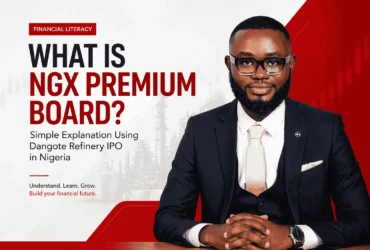
What is NGX Premium Board? (Explained Simply Using Dangote Refinery IPO in Nigeria)
Last week, I asked a simple question: “If Dangote Refinery IPO is listed on the Premium Board… do you understand what that means?” Many people said: “Iking, please explain.” So today…. As your Financial Literacy Advocate, let me break it ...
What is the difference between net equity value and net equity total cost on InvestNaija app in Nigeria?
In the InvestNaija App, Net Equity Value and Net Equity Total Cost are two different things used to track your stock performance. Here’s the simple explanation: 1. Net Equity Total Cost Net Equity Total Cost = Total amount of money you used to buy your shares This includes: Purchase price of sharesRead more
In the InvestNaija App, Net Equity Value and Net Equity Total Cost are two different things used to track your stock performance.
See lessHere’s the simple explanation:
1. Net Equity Total Cost
Net Equity Total Cost = Total amount of money you used to buy your shares
This includes:
Purchase price of shares
Brokerage fees
Transaction charges
SEC fees (if applicable)
Example
You bought:
1,000 UBA shares at ₦20 = ₦20,000
Charges = ₦200
Net Equity Total Cost = ₦20,200
This is your original investment amount.
2. Net Equity Value
Net Equity Value = Current market value of your shares
This changes daily depending on market price.
Example
If UBA share price increases to ₦23:
1,000 shares × ₦23 = ₦23,000
Net Equity Value = ₦23,000
3. The Difference (This Shows Your Profit or Loss)
Term
Meaning
Net Equity Total Cost
What you invested
Net Equity Value
What your investment is worth now
Difference
Profit or loss
Example
Net Equity Total Cost = ₦20,200
Net Equity Value = ₦23,000
Profit = ₦2,800
Quick Rule (Easy to Remember)
Net Equity Total Cost → Your Money In
Net Equity Value → Your Money Now
Why is my UBA rights issue shares reflected in my CSCS account but not showing on Bamboo Nigeria dashboard?
This is a very common situation when you receive shares from a Rights Issue. You're not alone — and your shares are most likely safe. Let's walk through what’s happening. What Happened You applied for the Rights Issue of United Bank for Africa Plc last year, and now: Your Central Securities ClearingRead more
This is a very common situation when you receive shares from a Rights Issue. You’re not alone — and your shares are most likely safe.
See lessLet’s walk through what’s happening.
What Happened
You applied for the Rights Issue of United Bank for Africa Plc last year, and now:
Your Central Securities Clearing System (CSCS) account has been credited
But the shares are not showing on Bamboo
This usually happens because Bamboo does not always support Nigerian primary market allotments directly.
Why It’s Not Showing on Bamboo
There are 3 main reasons:
1. Bamboo May Not Be Your Primary Broker for Nigerian Shares
Bamboo mainly focuses on:
US stocks
Some Nigerian stocks (via partner brokers)
If your UBA Rights Issue was processed through another stockbroker, the shares will sit in that broker’s CSCS account — not Bamboo.
2. Your CSCS Account May Be Different From Bamboo’s
You might have:
One CSCS account linked to Bamboo
Another CSCS account linked to your stockbroker
Your shares may have gone into the other CSCS account.
This is very common.
3. Bamboo May Not Yet Sync Rights Issue Shares
Sometimes:
Shares credited to CSCS
But Bamboo hasn’t updated holdings yet
This usually resolves within a few days to a week.
What You Should Do Now (Step-by-Step)
Step 1 — Check Your CSCS Statement
Look at the email from CSCS:
Confirm CHN number
Confirm broker name
If the broker is not Bamboo, then that’s the reason.
Step 2 — Contact Bamboo Support
Send them:
CSCS credit email
Your CHN number
Stock name (UBA)
Ask: “UBA rights issue shares credited to my CSCS account are not reflecting on my Bamboo dashboard. Kindly assist.”
Step 3 — Contact Your Original Broker
If you applied through:
Bank
Stockbroker
Investment firm
Then contact them too.
Important Question (This Will Help Me Diagnose Quickly)
How did you apply for the UBA Rights Issue?
Through Bamboo?
Through a stockbroker?
Through bank?
Through CSCS direct?
Tell me — I’ll tell you exactly what’s happening.
You’re doing something very good by tracking this closely.
Most investors forget about rights issues — but you’re following up, which is how disciplined investors operate.
Is it safe to invest in ARM Mutual Funds through PalmPay app in Nigeria?
Yes — ARM Mutual Fund on PalmPay is legit, but there are important things you should understand before investing through PalmPay. Let me break it down clearly. 1. Is PalmPay Legit? Yes. PalmPay is: Licensed by the Central Bank of Nigeria Deposits insured by Nigeria Deposit Insurance Corporation UsedRead more
Yes — ARM Mutual Fund on PalmPay is legit, but there are important things you should understand before investing through PalmPay.
See lessLet me break it down clearly.
1. Is PalmPay Legit?
Yes. PalmPay is:
Licensed by the Central Bank of Nigeria
Deposits insured by Nigeria Deposit Insurance Corporation
Used by millions of Nigerians for payments and savings
Also, in 2026, PalmPay and other fintechs had their licenses upgraded to national status by the CBN — meaning they can operate nationwide.
So PalmPay itself is legitimate.
2. Is ARM Mutual Fund Legit?
Yes. ARM Investment Managers:
Is registered with the Securities and Exchange Commission Nigeria
Offers regulated mutual funds
Uses trustees and custodians for investor protection
Example: ARM Money Market Fund rated AA-(f) and invests in treasury bills, commercial papers, etc.
So:
ARM = Legit
PalmPay = Legit
3. So What Happens When You Invest Through PalmPay?
PalmPay is just a distribution platform.
Meaning:
Your money → PalmPay
PalmPay → ARM Mutual Fund
ARM manages investment
So PalmPay is not managing your money — ARM is.
This is similar to:
Investing in ARM through banks
Investing through Cowrywise
Investing through investment apps
4. Should You Invest Through PalmPay? (My Professional Opinion)
Advantages
✅ Easy to invest
✅ Low minimum amount
✅ Convenient
✅ Good for beginners
Disadvantages
⚠️ Less transparency than investing directly with ARM
⚠️ Withdrawal may take slightly longer
⚠️ Limited fund choices
My Professional Recommendation
If you are serious about investing (which you clearly are), I recommend:
Better Option (Preferred):
Invest directly through ARM website/app
Still OK Option:
Invest through PalmPay (especially small amounts)
My Personal Rule
Use PalmPay for:
Small investments
Trying out funds
Use direct investment (ARM app) for:
Large investments
Long-term portfolio
When is the next payout date for FG Savings Bond in Nigeria for investors who subscribed in January 2026?
No — you're not alone, and you should not be worried yet. Your January 2026 FGN Savings Bond first coupon was scheduled for April 21, 2026 Key Details for January 2026 FGN Savings Bond Settlement date: January 21, 2026 First coupon payment: April 21, 2026 Payment frequency: Quarterly (every 3 monthsRead more
No — you’re not alone, and you should not be worried yet.
See lessYour January 2026 FGN Savings Bond first coupon was scheduled for April 21, 2026
Key Details for January 2026 FGN Savings Bond
Settlement date: January 21, 2026
First coupon payment: April 21, 2026
Payment frequency: Quarterly (every 3 months)
Next payments: July 21, October 21, January 21
So technically:
Payment date = April 21, 2026
But crediting to investors may take 1–3 working days after payment date
This means:
If you haven’t received it yet (today April 22), it’s still within normal timeline.
Why You May Not Have Received It Yet
This usually happens due to:
1. Broker Processing Time
Your payment flows like this: FGN → Registrar → CSCS → Stockbroker → Your Bank
This can take:
1–3 working days
Sometimes up to 5 working days
2. Bank Processing Delay
Sometimes:
Payment has been made
But bank hasn’t credited yet
3. CSCS / Mandate Issues (Less Common)
Check:
Bank account linked to CSCS
Name matching
Mandate form completed
What You Should Do Now
Wait until:
April 24 or April 25
If still not credited:
Contact your stockbroker
Ask: “Has January 2026 FGN Savings Bond coupon been credited?”
Quick Check Question (Important)
Did you:
Invest through a stockbroker?
Or through bank (like Stanbic, UBA, etc.)?
Tell me — I’ll tell you exactly how long it should take.
Also, since you’re investing in FGN Savings Bonds, you’re doing exactly what conservative investors do:
Low risk
Predictable income
Government backed
How are management fees calculated on mutual funds and investment portfolios in Nigeria?
When a stockbroker or fund manager charges 1.5% management fee on Net Asset Value (NAV), the fee is charged on your total investment value, not just the profit. What "1.5% on Net Asset Value" Means Net Asset Value (NAV) = Your invested capital + accrued profit (or loss) So the 1.5% is calculated onRead more
When a stockbroker or fund manager charges 1.5% management fee on Net Asset Value (NAV), the fee is charged on your total investment value, not just the profit.
See lessWhat “1.5% on Net Asset Value” Means
Net Asset Value (NAV) =
Your invested capital + accrued profit (or loss)
So the 1.5% is calculated on the total value of your investment.
Example 1 — If Your Investment Makes Profit
You invested: ₦100,000
Profit earned: ₦10,000
Total NAV: ₦110,000
Management fee =
1.5% × ₦110,000 = ₦1,650
So they charge on ₦110,000, not just the ₦10,000 profit.
Example 2 — If Your Investment Makes Loss
You invested: ₦100,000
Value drops to: ₦95,000
Management fee =
1.5% × ₦95,000 = ₦1,425
Even if you’re at a loss, management fee is still charged.
Important: How This Fee is Usually Charged
Most fund managers:
Don’t deduct once yearly
Deduct daily or monthly (pro-rated)
Already reflect it in your NAV
So you may not see the deduction directly — it’s already embedded.
Why This Matters (Smart Investor Insight)
A 1.5% management fee is:
Low–Moderate for actively managed funds
High if returns are low
General rule:
0.5% – 1% → Very good
1% – 1.5% → Acceptable
Above 2% → Expensive
Since you’re getting deeper into investment analysis (you’ve been asking about CPs, financial statements, funds), this is a very good question — professionals always check fees first because:
High fees reduce long-term returns significantly 📉
What is the difference between a company, holding company, and subsidiary company in Nigeria business structure?
Understanding Company, Holding Company, and Subsidiary Company is very important when analyzing investments, financial statements, and even commercial papers. Let's break it down simply and professionally. 1. A Company A Company is simply a legal business entity created to carry out business activitRead more
Understanding Company, Holding Company, and Subsidiary Company is very important when analyzing investments, financial statements, and even commercial papers. Let’s break it down simply and professionally.
See less1. A Company
A Company is simply a legal business entity created to carry out business activities.
It can:
Make profits
Own assets
Borrow money
Be sued or sue
Issue shares
Example
Dangote Cement Plc is a company because:
It produces cement
It earns revenue
It has shareholders
It publishes financial statements
So, any registered business entity is a company.
2. A Holding Company
A Holding Company is a company that does not mainly produce goods or services but owns shares in other companies.
Its main purpose is:
Control other companies
Own investments
Manage subsidiaries
Example
Dangote Industries Limited is a Holding Company because it owns:
Dangote Cement Plc
Dangote Sugar Refinery Plc
NASCON Allied Industries Plc
Dangote Industries controls these companies.
So:
Holding company = Parent company
3. A Subsidiary Company
A Subsidiary Company is a company that is **owned
How can investors analyze commercial papers of companies not listed on NGX in Nigeria?
Analyzing Commercial Papers (CPs) of companies not listed on NGX requires a different approach because you won’t have public financial statements easily available like listed companies. But there are still reliable ways to evaluate them. Here is the professional approach investors use: 1. Start WithRead more
Analyzing Commercial Papers (CPs) of companies not listed on NGX requires a different approach because you won’t have public financial statements easily available like listed companies. But there are still reliable ways to evaluate them.
See lessHere is the professional approach investors use:
1. Start With the Issuing Document (Most Important)
Before any Commercial Paper is issued, the company releases:
Information Memorandum (IM)
Offer Circular
Programme Memorandum
This document contains:
Company overview
Financial statements (usually 3–5 years)
Purpose of borrowing
Risk factors
Directors and management
Repayment structure
Always request this document from:
Issuing house
Broker
Fund manager
If they cannot provide it, that is already a red flag 🚩
2. Check Credit Rating (Very Important)
Most credible Commercial Papers in Nigeria are rated by:
Agusto & Co
Global Credit Rating (GCR)
DataPro Limited
Look for ratings like:
A1 / A2 (Strong)
B (Moderate risk)
C (High risk)
Rule of Thumb:
A rating = safer
No rating = risky
If a company issues CP without rating, be extra cautious.
3. Check Where the CP is Registered
Most Nigerian Commercial Papers are registered on:
FMDQ Securities Exchange
Go to FMDQ website and search:
Company name
CP programme
Maturity period
Issuance history
This helps you confirm:
If the CP is legitimate
Past issuances
Repayment history
4. Verify Company Registration (Basic Due Diligence)
Check company details with:
Corporate Affairs Commission
Look for:
Years of operation
Directors
Shareholders
Business type
Avoid:
Newly formed companies issuing large CPs
Unknown management teams
5. Ask These 5 Key Questions Before Buying
Professional investors always ask:
What is the company’s business model?
What is the repayment source?
What is the maturity period? (30, 90, 180, 270 days)
Who is the issuing house?
Has the company issued CP before?
6. Check Who is Arranging the Deal
Commercial Papers are usually arranged by:
Investment banks
Asset managers
Issuing houses
Examples:
Stanbic IBTC Capital
Chapel Hill Denham
Vetiva Capital
If a reputable issuing house is involved, risk is lower.
7. Look at Yield vs Risk (Very Important)
Be careful of:
Extremely high yields
Example:
90-day CP at 30% → High risk 🚩
90-day CP at 18–22% → More reasonable
High return = high risk
8. My Personal Rule (Simple)
Only buy CPs that have:
✅ Credit rating
✅ FMDQ registration
✅ Known issuing house
✅ Financial statements available
If any two are missing, I usually avoid.