
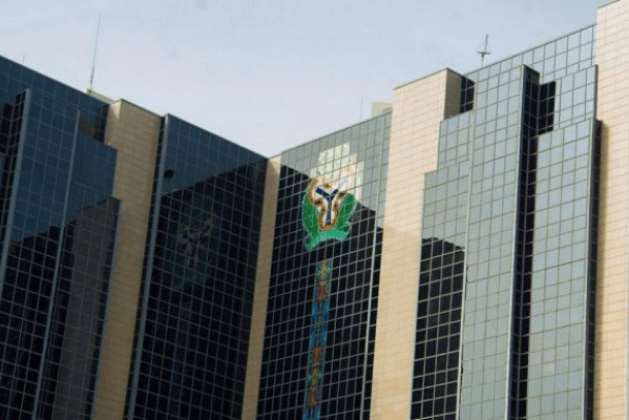
The Central Bank of Nigeria has reopened Open Market Operations (OMO) to individuals, companies and non-bank financial institutions.
But what exactly is OMO, why is the CBN doing this, and what should investors be watching?
Oya Calm down.
Let’s forget the big grammar for a moment.
Imagine there is a village market.
On one particular day, too much money is moving around the village, and everyone has plenty of cash in their hands.
When too much money is chasing the same goods, prices can start going up.
So the village chairman says:
“Bring some of that extra money to me. I will keep it safely for a while and give you something in return.”
That is, in very simple terms, what the Central Bank of Nigeria (CBN) is trying to achieve with OMO.
So, what exactly is OMO?
OMO means Open Market Operations.
It is one of the tools the CBN uses to manage how much money is circulating in the financial system.
When the CBN wants to remove excess naira from circulation, it can sell OMO bills.
Investors put their money into those bills, and the money is temporarily taken out of circulation.
In return, investors receive a return when the investment matures.
Think of it as:
CBN needs to remove excess cash = CBN sells OMO bills = investors provide the cash = money leaves circulation temporarily.
That is the basic idea.
And this is where things become interesting for ordinary Nigerians.
Why are Nigerians suddenly talking about OMO?
For years, ordinary individuals had very limited access to OMO securities.
But on August 12, 2026, the CBN reopened participation to individuals, companies and non-bank financial institutions, with transactions going through Deposit Money Banks. This reversed the restriction introduced in 2019.
And investors immediately showed enormous appetite.
At the August 13 OMO auction, investors submitted about ₦4.93 trillion in bids for just ₦600 billion initially offered.
The CBN eventually allotted approximately ₦2.60 trillion.
The 103-day OMO bill cleared at 20.39%, while the 138-day bill cleared at 20.01%.
Now pause.
₦4.93 trillion chasing ₦600 billion.
That tells us something.
There is a lot of money looking for somewhere to earn a decent return.
But here is the part many Nigerians may be missing
OMO is not simply the CBN giving Nigerians a new way to make 20%.
There is a bigger economic story happening underneath.
The CBN is trying to manage liquidity.
In simple English:
How much money is available and moving around the economy.
If there is too much excess cash chasing goods, assets and investments, inflationary pressure can increase.
So the CBN can use instruments like OMO to pull some of that money out of circulation.
This is why OMO is primarily a monetary-policy tool, while Treasury Bills are government securities used to raise funds for government financing. They may look similar to an ordinary investor, but their purposes are different.
Now let’s talk about YOU, the investor.
Suppose you have ₦1 million sitting idle.
You have several choices.
You could leave it in a bank account.
You could put it in a money-market fund.
You could buy Treasury Bills.
You could invest in stocks.
You could invest in a business.
Or, where eligible and available through your bank, you could consider OMO.
But here is the lesson:
Don’t look at the 20% and immediately conclude, “I have found free money.”
You haven’t.
Every investment has a price.
With OMO, one of the biggest prices is time.
because…
Your money is tied up until maturity unless you can sell through the secondary market, where the price can move with market conditions.
So the better question isn’t:
“How much will I make?”
Ask:
“When will I need this money?”
That one question can save an investor from making a very bad decision.
And there is another important question: Will the 20% last?
Nobody can promise you that it will.
The recent OMO auction produced yields around 20%, but future auction rates can change depending on liquidity conditions, investor demand, CBN operations and monetary policy.
And there is an interesting possibility.
If thousands or millions of investors begin competing for OMO bills, demand could affect the yields offered in future auctions.
So don’t build your financial plan around today’s headline rate.
Build it around your goals.
What could this mean for the stock market?
This is another part investors should watch.
Imagine two shops.
Shop A says:
“Give me your money and I will give you a relatively predictable return over a short period.”
Shop B says:
“Give me your money and become a shareholder. You could make much more, but you could also lose money.”
If Shop A starts offering an attractive return, some people may decide:
“Why should I take more risk when I can earn a decent return elsewhere?”
That doesn’t mean Nigerians will suddenly abandon the stock market.
It simply means fixed-income investments become stronger competition for investors’ money.
And that could make investors look more carefully at stocks:
What is the dividend?
What is the company’s profit?
What is the valuation?
What am I being compensated for taking equity risk?
That is healthy for the market.
The bigger lesson Nigerians should take from OMO
This story is bigger than OMO.
It is about financial literacy.
A headline can say:
“20% returns are back!”
And thousands of people can rush towards it without understanding what they are buying.
But an informed investor asks:
What is OMO?
Who issues it?
Why is it being issued?
How long is my money locked?
What happens to the rate next?
How does it compare with Treasury Bills?
How does it compare with money-market funds?
What are the risks?
And does it actually fit my financial goals?
That is the difference between investing because everybody is talking about something and investing because you understand what you are doing.
This is exactly why we are building Fokona.
One of the biggest problems I have discovered as a financial literacy advocate is not that Nigerians don’t want to understand money.
Many Nigerians simply don’t have someone explaining it in a language they understand.
Financial news is often filled with words like:
OMO.
MPR.
Liquidity.
Sterilisation.
Yield.
Inflation.
Monetary tightening.
Treasury Bills.
To a financial professional, these words may be normal.
But to the trader in Aba, the farmer in Ebonyi, the teacher in Kaduna, the young graduate in Lagos or the business owner in Kano, they can sound like another language.
That has to change.
And that is one of the reasons we are building Fokona News.
We don’t just want to tell Nigerians what happened.
We want to explain:
What happened.
Why it happened.
What it means for your money.
Who may benefit.
Who may be affected.
And what you should be watching next.
Because financial literacy should not belong only to economists, bankers and investment professionals.
It belongs to everybody.
and our goal is simple:
Don’t just read financial news. Understand it.
Fokona News is here.
We will keep breaking down the complicated financial stories shaping Nigeria’s economy and your money, in plain language.
Honestly, I am delighted to be an early member of this financial literacy community. This community is going to compete with other global ranking financial literacy platforms.
I remember, my secondary school economics class on types of monetary policy tools that CBN uses to control currency circulation in the economy. OMO is one of those tools, coming across this economic after many years serves as a refresher course to me, and not just a financial news.
Thank you Iking Ferry for birthing this platform.