
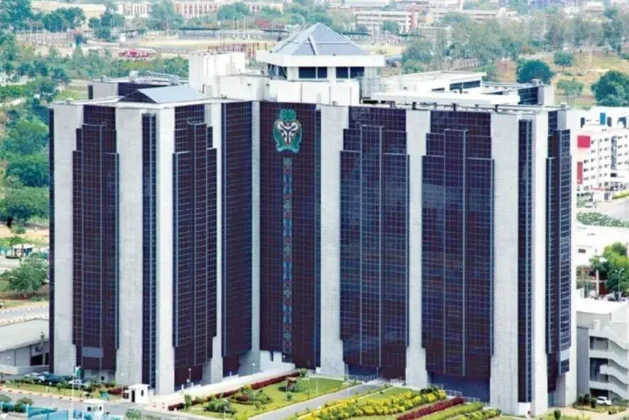
The Central Bank of Nigeria (CBN) is preparing to offer ₦700 billion worth of Treasury Bills at its first Nigerian Treasury Bills (NTB) auction for September 2026.
The auction is scheduled for September 3, 2026, and it will cover three different Treasury Bill periods:
- 91 days – ₦100 billion
- 182 days – ₦100 billion
- 364 days – ₦500 billion
But what does this actually mean for you as an investor?
Let’s break it down.
First, what is the CBN doing?
Imagine the government needs to borrow money for a short period.
Instead of going to one person and saying, “Please lend us money,” it offers Treasury Bills to investors.
You give your money to the government for an agreed period, and in return, you receive a return based on the rate at which you bought the Treasury Bill.
So, when you hear that the CBN is offering ₦700 billion in Treasury Bills, it simply means the government is going back to the market to raise money through short-term government securities.
But there is another important reason to watch what is happening.
WHY THIS AUCTION MATTERS
Out of the ₦700 billion being offered, ₦500 billion is for the 364-day Treasury Bill.
That means the one-year Treasury Bill represents the largest part of this particular auction.
And this is important because investors have been showing strong interest in Treasury Bills.
At the August 12 auction, investors submitted about ₦4.4 trillion in bids for ₦700 billion that was advertised.
That is a huge difference.
It tells us something simple:
There is strong demand for Nigerian government securities.
Investors are looking for places to put their money, especially assets that are considered relatively lower-risk compared with many other investments.
BUT HERE IS WHERE YOU NEED TO PAY ATTENTION
The interest rate you see on a Treasury Bill is not necessarily fixed forever
It can move depending on what is happening in the economy, including liquidity, inflation, monetary policy and investor demand.
For example, at the August 26 auction, the stop rate for the one-year Treasury Bill fell to 17.15%, after previously rising to 17.59% at the August 12 auction.
So don’t just see a Treasury Bill rate today and assume that the next auction will give you exactly the same rate.
The market can change.
WHY IS THE CBN SELLING SO MANY TREASURY BILLS?
This is where many people misunderstand the news.
The government is raising money, but Treasury Bills also play an important role in the money market.
Think about a bucket of water.
If there is too much water inside the bucket, you may need to remove some of it.
Money in an economy can work in a similar way.
When there is too much liquidity – meaning too much money moving around the financial system, it can create pressure on inflation and other economic conditions.
The CBN can therefore use monetary policy tools and government securities to influence how much money is available in the financial system.
This is one reason investors should not look at Treasury Bills only as “something that gives me interest.”
There is a bigger economic story behind them.
WHAT SHOULD INVESTORS WATCH?
There are three things I would personally watch closely.
1. THE TREASURY BILL RATE
If you are considering investing, the rate matters.
But don’t look at the rate alone.
Look at the return relative to inflation, your investment period and your financial goals.
2. DEMAND AT THE AUCTION
When investors submit significantly more money than the amount being offered, it tells us that demand is strong.
The September auction will therefore give investors another opportunity to observe the level of demand for government securities.
3. WHAT THE CBN DOES WITH INTEREST RATES
The September Treasury Bill auction is also coming ahead of the CBN’s September Monetary Policy Committee meeting.
Analysts are watching to see whether the CBN may begin reducing interest rates or continue maintaining a tighter approach to liquidity.
That could have implications for Treasury Bills, money market funds, bonds, bank deposit rates and other fixed-income investments.
WHAT DOES THIS MEAN FOR THE AVERAGE NIGERIAN?
Let’s make it very simple.
If you have money sitting in your account and you are thinking about investing it, Treasury Bills are one of the instruments you may come across.
But don’t rush because somebody tells you:
“Treasury Bill is paying 17%.”
Ask questions.
For how long?
What is the actual yield?
What are the applicable charges?
What happens when the investment matures?
Does the return make sense after considering inflation and your financial goals?
And most importantly:
Does this investment fit your own financial plan?
Investment is not about chasing the highest number you see.
It is about understanding where your money is going, why it is going there, how long it will stay there, and what you expect to get back.
That is financial literacy.
THE BIGGER PICTURE
The September auction is part of the CBN/DMO’s broader third-quarter Treasury Bill programme.
For Q3 2026, the programme provides for ₦5.8 trillion in Treasury Bills, made up of:
- ₦900 billion in 91-day bills
- ₦900 billion in 182-day bills
- ₦4 trillion in 364-day bills
Treasury Bills worth about ₦2.644 trillion are also expected to mature during the quarter.
After accounting for those maturities, the programme implies an estimated ₦3.16 trillion in net new borrowing.
So this is bigger than just another ₦700 billion auction.
It is part of a much larger money-market programme.
FOKONA EXPLAINS
This is exactly why financial news needs to be explained differently.
You can read:
“CBN offers ₦700 billion NTBs.”
and scroll past it.
But behind that one sentence are questions about interest rates, liquidity, inflation, government borrowing, investor demand and your own investment decisions.
At Fokona, our goal is not simply to tell you what happened.
We want you to understand what happened and why it matters to your money.
Because when you understand the financial system, you stop making investment decisions simply because someone told you:
“This one is paying 20%.”
You start asking better questions.
And better questions lead to better financial decisions.
Fokona News – We don’t just report financial news. We explain it.
This is very helpful
Thanks fokona, this is really helpful
Good to learn from this 🙏
Interesting
Awesome